Our story
Our story started with one bad night after another.
Our founder struggled with sleep apnea for years. What began as a personal search for better sleep became a much bigger mission: make it easier for people everywhere to recognize their risk, get properly tested, and take the next step toward better sleep.
One story became one mission:
Help millions of people sleep — and live — better.
1:12 AM
Awake again…
The founder story
It started with a problem we knew personally.
Our founder spent years struggling with sleep apnea. Like millions of other people, what happened during the night followed him into the next day.
Poor sleep wasn't just about being tired. It affected energy, focus, productivity, mood — and ultimately, quality of life.
Getting answers about your sleep shouldn't have to feel complicated.
The deeper we looked, the bigger the problem became. This wasn't just one person's story. It was happening in bedrooms around the world — people snoring, waking up exhausted, struggling through their afternoons, falling asleep during the day, experiencing interrupted breathing at night.
And many had no idea that obstructive sleep apnea could be contributing to what they were experiencing. That realization became the foundation for Help Me Sleep Tonight.
This is bigger than us
The world has a sleep problem.
~0 BILLION
Adults worldwide aged 30–69 were estimated to have obstructive sleep apnea (about 936 million) in a landmark global analysis.
Source: Benjafield et al., The Lancet Respiratory Medicine, 2019.
0%
Approximately 80% of U.S. adults with OSA are estimated to be undiagnosed.
Source: American Academy of Sleep Medicine (report by Frost & Sullivan), 2016.
~0 MILLION
American adults are estimated to have obstructive sleep apnea (29.4 million).
Source: American Academy of Sleep Medicine (report by Frost & Sullivan), 2016.
0–0 MILLION
Americans are estimated to have chronic, or ongoing, sleep disorders.
Source: National Heart, Lung, and Blood Institute (NIH), Web page.
MORE THAN 0 IN 3
American adults report not getting the recommended amount of sleep (34.8% in 2014).
Source: Centers for Disease Control and Prevention (MMWR), 2016.
The undiagnosed problem
Millions may not know they have it.
Sleep apnea doesn't always announce itself.
Obstructive sleep apnea occurs when the upper airway becomes blocked repeatedly during sleep, reducing or stopping airflow. Someone can spend hours in bed and still wake up feeling like they never truly rested.
Symptoms and risk factors alone cannot diagnose sleep apnea. A sleep study and appropriate clinical evaluation are needed for diagnosis.
Check my sleep apnea risk →What happens while you sleep?
Your body doesn't stop working when you fall asleep.
With obstructive sleep apnea, the upper airway can repeatedly narrow or become blocked during sleep. These interruptions can reduce oxygen and disrupt normal sleep. A person may not consciously remember these events the next morning — one reason sleep apnea can go unnoticed.
This visualization is educational and does not represent an individual patient's airway or diagnosis.
Sleep affects more than sleep
What happens at night can follow you all day.
Brain
Poor-quality sleep and untreated sleep apnea can contribute to problems with concentration, memory, decision-making and daytime alertness.
Sleep isn't a luxury.
It's part of your health.
We started asking a simple question.
Why should discovering a sleep problem be so difficult?
Why can't screening begin from home?
Why can't testing come to you?
Why can't meeting with a sleep specialist be simple?
And why can't technology help connect all of those pieces?
So we built Help Me Sleep to provide access to care to millions of Americans.
Our mission
Coming together to help end the sleep crisis.
Better sleep. Better health. Better lives.
Help Me Sleep Tonight was created around one simple belief:
Understanding your sleep health should be easier.
We want to remove friction between wondering if something is wrong and getting real answers — combining education, modern screening technology, convenient at-home testing and access to qualified sleep professionals into one simple journey.
- —Not to diagnose someone from a website.
- —Not to replace physicians.
- —Not to replace a sleep study.
But to make it easier for people to recognize potential risk and take the next appropriate step.
From questions to answers.
In 3 simple steps.
Scan
Start with a quick facial scan + questionnaire
Complete a quick, non-invasive facial scan and short sleep-risk questionnaire to identify potential risk indicators. This is a screening experience — not a diagnosis.
Sleep
Complete an at-home sleep study
When appropriate, an at-home sleep testing device can be delivered directly to your front door. Complete your sleep study from the comfort of your own bed.
Review
Meet virtually with a sleep specialist
After testing, meet virtually with an appropriately qualified sleep professional who can review your results and discuss the appropriate next steps.
Scan. Sleep. Understand.
Start my sleep screening →Real science. Real sources.
Education built around real sleep science.


This is bigger than better sleep.
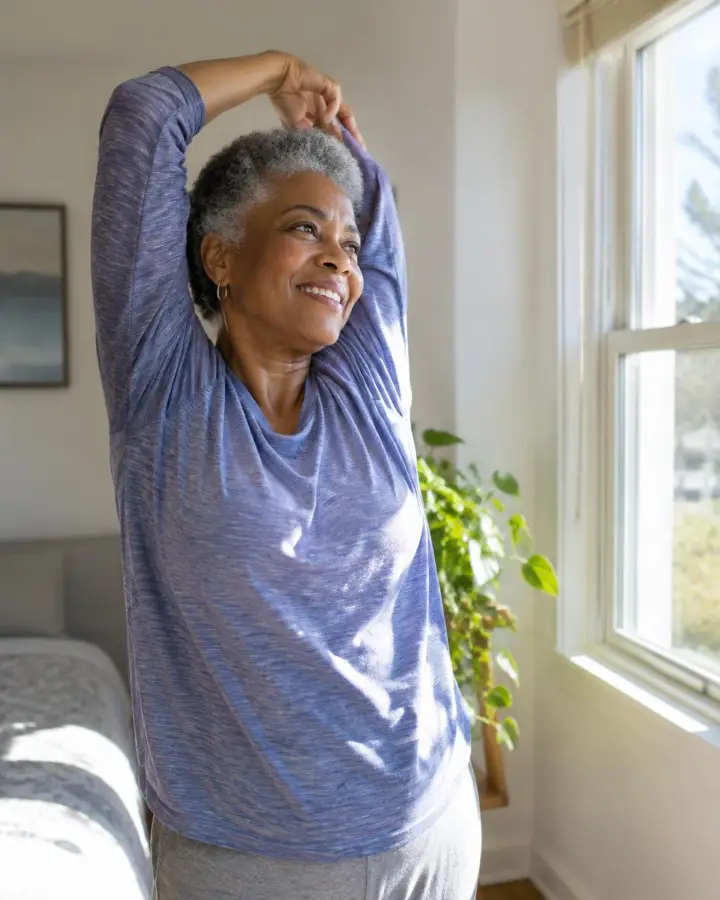
It's about waking up with energy.
Being present with your family.
Thinking clearly.
Protecting your health.
Performing at your best.
And helping people recognize that constantly feeling exhausted shouldn't simply be accepted as normal.
Millions of people are struggling with their sleep.
We want to help them find answers.
Your better night could start tonight.
Take the first step toward understanding your sleep health with a quick, convenient screening.
Help Me Sleep Tonight provides screening and facilitates access to sleep testing and professional evaluation. Screening results are not a diagnosis. Obstructive sleep apnea can only be diagnosed following appropriate clinical evaluation and diagnostic testing.